

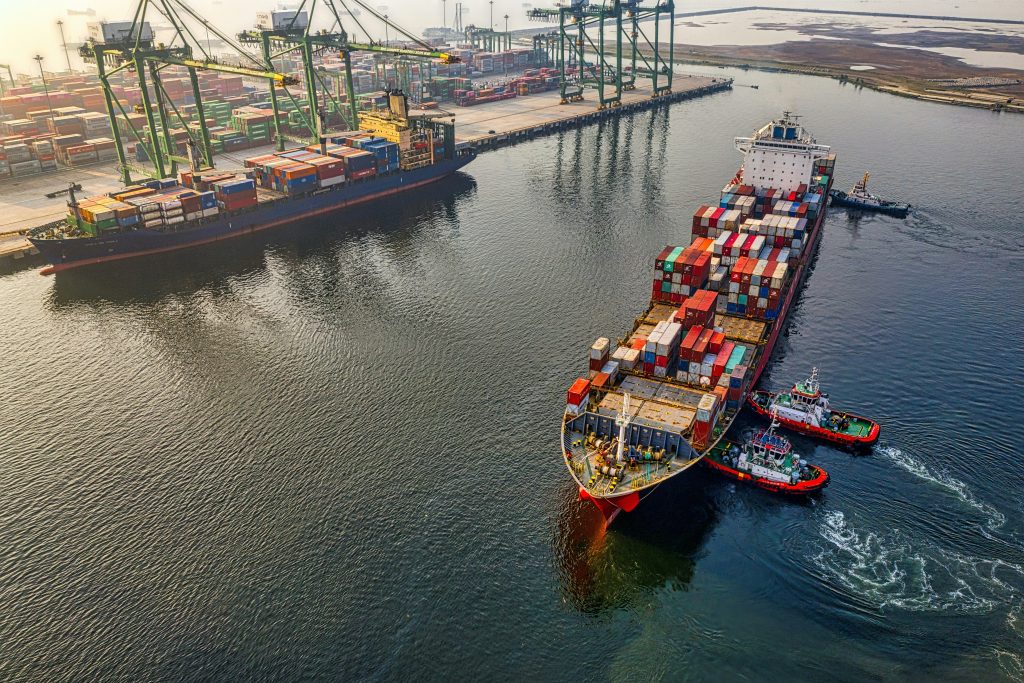
The year 2025 has emerged as a landmark moment for Pakistan’s maritime sector, marking a decisive shift from long-standing underutilisation to strategic national priority. Through ambitious planning, international partnerships, and renewed political focus, Pakistan has begun repositioning its coastline, ports, and shipping industry as key drivers of economic growth, regional connectivity, and global trade integration.
At the heart of this transformation lies a clear realization: Pakistan’s future prosperity is deeply tied to the sea.
A New Maritime Vision Takes Shape
One of the most significant developments of 2025 was the launch of the Pakistan-China Five-Year Maritime Action Plan (2025–2029) under CPEC Phase-II. Unlike earlier infrastructure-heavy phases, this plan focuses on efficiency, connectivity, industrialization, and sustainability.
The plan outlines modernization of ports, adoption of smart port technologies, shipbuilding and repair facilities, maritime environmental protection, and the development of port-linked industries. It signals a strategic shift from building assets to activating economic value.
Gwadar: From Promise to Platform
Gwadar Port remained the centrepiece of maritime developments throughout 2025. Once seen largely as a future prospect, Gwadar is now being actively positioned as a regional trade and transhipment hub.
Key initiatives include:
- Expansion of port handling capacity
- Development of Free Zone Phase-II
- Integration of Gwadar Port with the New Gwadar International Airport, enabling air-sea logistics
- Improved inland connectivity via expressways
These steps are transforming Gwadar from a standalone port into a multimodal logistics ecosystem, linking Pakistan with Central Asia, the Middle East, Africa, and western China.
Leadership Signals and Policy Momentum
Political ownership of the maritime agenda became clearer in 2025. President Asif Ali Zardari’s remarks, highlighting a bright future for Pakistan’s maritime sector, reinforced the government’s commitment to long-term reform.
Key policy directions emphasized during the year included:
- Strengthening the national shipping fleet to reduce reliance on foreign carriers
- Digitisation of port operations through the Pakistan Single Window and Port Community System
- Creating employment and skills development opportunities in coastal regions
This top-level endorsement helped align ministries, regulators, and port authorities around a shared maritime vision.
Beyond Gwadar: A Coastline-Wide Strategy
While Gwadar drew much attention, 2025 also saw progress at Karachi Port and Port Qasim, including dredging, terminal upgrades, and capacity expansion to handle larger vessels.
More importantly, Pakistan initiated work on a long-term, century-scale maritime roadmap, including:
- Identifying locations for new deep-sea ports
- Planning coastal industrial zones
- Expanding shipbuilding, ship recycling, and marine services
This long-horizon planning reflects a recognition that maritime competitiveness is built over decades, not years.
Global Interest and Diversified Partnerships
Another notable trend in 2025 was the broadening of international engagement in Pakistan’s maritime sector. In 2025, Pakistan’s maritime engagements expanded beyond traditional ties, attracting interest from a U.S. investment delegation exploring opportunities at Karachi Port, Port Qasim, and Gwadar; a $1 billion commitment from Hong Kong’s Hutchison Ports to upgrade infrastructure; a strategic joint venture with the UAE’s AD Ports Group for regional logistics; and plans with China’s Shandong Xinxu Group to build a maritime industrial complex at Port Qasim.
Such diversification reduces dependency on a single partner and strengthens Pakistan’s position within global supply chains.
Shipping, Industry, and the Blue Economy
The maritime revival in 2025 was not limited to ports alone. Pakistan also moved to:
- Expand the Pakistan National Shipping Corporation (PNSC) fleet
- Plan maritime industrial complexes, including green ship recycling
- Promote the blue economy, covering fisheries, coastal tourism, and marine resources
Together, these initiatives aim to turn the sea into a sustainable source of exports, employment, and foreign exchange.
Why 2025 Matters
What sets 2025 apart is not just the number of announcements, but their strategic coherence. For the first time in years, Pakistan’s maritime sector is being treated as:
- A core pillar of economic policy
- A tool for regional connectivity
- A source of industrial and export growth
- A long-term national asset
The focus has shifted from isolated projects to systems, integration, and outcomes.
Conclusion: Setting Sail Toward a Maritime Economy
Pakistan’s maritime sector still faces challenges, including governance, security, financing, and skills development. Yet 2025 has laid a strong foundation. With sustained policy continuity, institutional reform, and inclusive development for coastal communities, Pakistan has a real opportunity to convert its geographic advantage into economic strength.